BLOG 360
A grenade threat
Many people wrongly assume that a grenade threat is unrealistic in close protection work. It is not. Our own practice and that of our Israeli colleagues show clearly that such cases do happen, including during abductions.
Shooting at the person making the threat is difficult for obvious reasons: he grabs the client and takes him away without any noise.
So, the main difficulty in a grenade threat is closing the distance to the attacker. Approaching from behind is, of course, more comfortable.
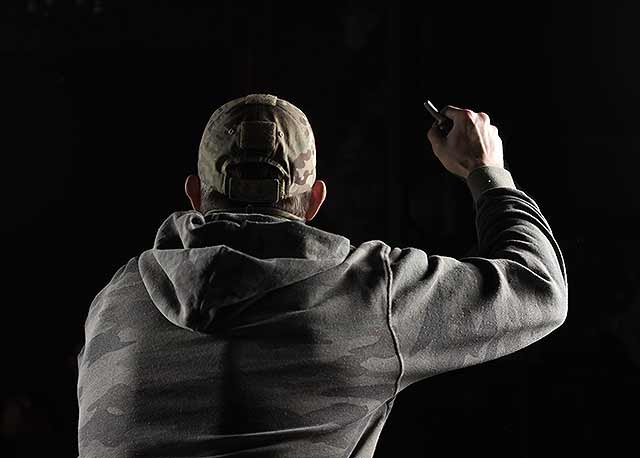
That option is not always available, and when the threat comes from the front the bodyguard has to work tactically: talk, calm him down, distract him, carefully scatter his attention so that another officer can approach.
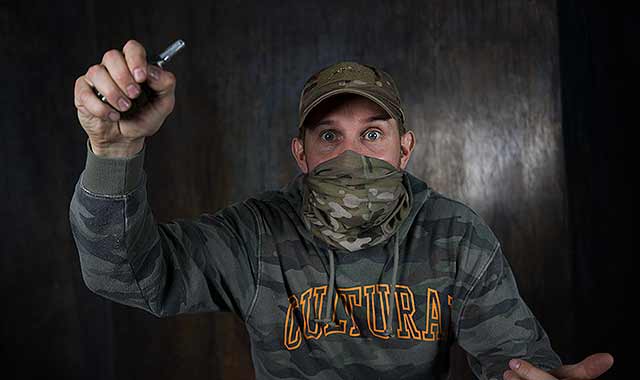
The purpose of closing in is to grip the hand holding the grenade with both hands, as hard as possible, so that the attacker cannot open his fist.
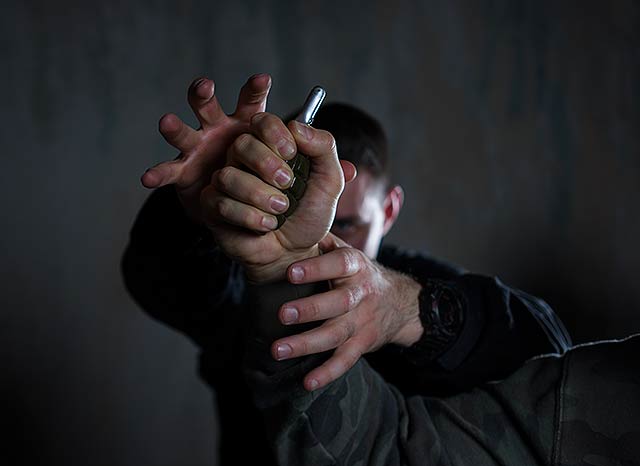
As soon as the armed hand is locked, a trained bodyguard smashes the attacker’s groin (if the disarming is done from the front) or his head (if from behind), then applies a wrist lock and puts him on the ground. After that, without letting go of the armed hand for a second, he delivers as many kicks to the head as needed. Only when the attacker is no longer able to resist does the officer start taking the grenade out of his hand.
Taking it out looks like prying the grenade out of the fist, making sure it does not drop — with the dramatic release of the lever that would follow.
A lot of words, but together it looks like this:
A note for the sceptics: not in Tel Aviv, Johannesburg or, more predictably, Caracas, but in Saint Petersburg, Russia, an attacker walked into a courtroom carrying a grenade.
To back up his position with a solid argument, so to speak.
And, sadly, he did back it up.